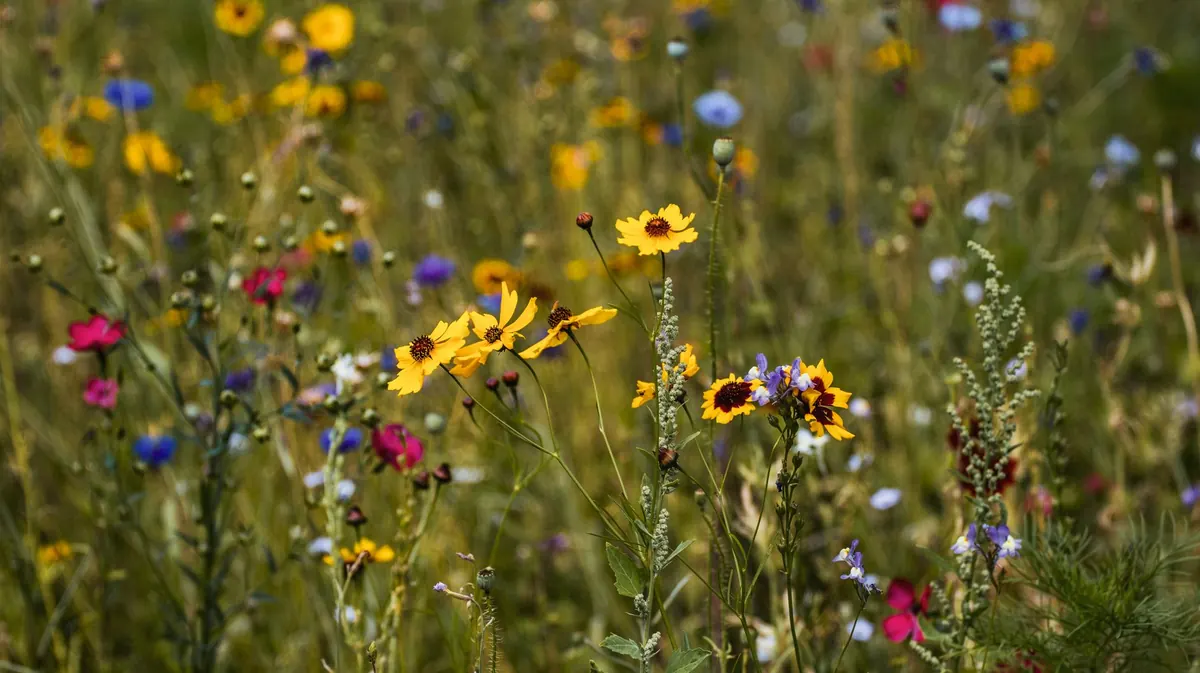
Clay is the soil most people complain about and the one many meadows are asked to grow on. It holds water through winter, sets like brick in a dry August, and arrives with far more fertility than a wildflower meadow really wants. None of that makes the job impossible, but it does change the order of work: drainage and structure first, seed choice second, patience throughout. Do the groundwork well in the first season and a clay meadow can look every bit as good as one on lighter ground — often better in a dry July, because the roots are sitting in moisture.
Start by reading the ground
Before buying seed, spend an afternoon finding out what you are actually dealing with. Clay varies enormously: some sites are heavy loam that merely holds water, others are stiff blue-grey stuff that stays wet until May. Dig a spade-depth hole and squeeze a handful of soil. If it rolls into a ribbon longer than about 5cm without breaking, there is a lot of clay in it.
Then test how it drains. Fill the hole with water, let it drain, fill it again, and see where the level sits after 24 hours. If it has barely moved, drainage is your first problem, not fertility. Walk the site after heavy rain too, and note where water stands longest — that is where you will either need drainage or a different, wetter-loving mix of plants. A simple pH kit is worth the small cost; most meadow species are happy between roughly pH 5.5 and 7.5, and clay is often neutral to slightly alkaline, so liming is rarely needed.
Sort out drainage before you touch the soil
Wildflower sowings on clay fail more often from waterlogging than from anything else. Seed sitting in cold, saturated ground through winter rots, and the species that do survive tend to be the ones you did not want.
Where the problem is local, work with the site rather than against it. Avoid sowing in hollows and low corners. On a flat, slow-draining plot, a very gentle camber or shallow raised beds can make the difference between a meadow and a bog. For genuine waterlogging across the whole site, perforated land drains in gravel-filled trenches leading to a soakaway or ditch are the proper answer, and that is a job for a drainage contractor rather than a weekend with a spade. If you plan to discharge water into a ditch or watercourse, check whether you need permission first.
Be sceptical about the old advice to dig in sand. Adding a thin layer of sand to clay produces something closer to concrete. Grit or coarse sand worked into the top few centimetres will improve the seedbed and help air reach the roots, but it will not transform the drainage below. If part of the site stays wet, plant it with damp-loving natives instead: meadowsweet, ragged robin, purple loosestrife and devil's-bit scabious all cope well.
Preparing a seedbed on clay
Clay is unforgiving about timing. Worked when wet, it smears and compacts into clods that take years to recover. Wait until it is friable — crumbly in the hand, not sticky.
- Clear what is there. Smother dense vegetation with black polythene for a full growing season, or cultivate and harrow repeatedly to exhaust the weed seedbank. Herbicide is a last resort; if you use it, follow the label exactly and check restrictions near water.
- Wait for two flushes of weeds. Clay seedbanks are stubborn. Let annual weeds germinate, then cultivate again before sowing.
- Break the compaction. Fork or subsoil to about 20–25cm so roots and water can move. Do not rotovate to the same depth year after year, which creates a hard pan just below the blades.
- Make a fine tilth only on top. The top 2–3cm needs to be crumbly for seed contact; below that, firm is good.
- Level and firm. Rake level, then roll or tread the surface. On clay this matters more than on any other soil, because the surface crusts quickly and seed left sitting on top will not germinate.
Choosing seed that suits heavy ground
Buy a mix blended for heavy or clay soils from a UK supplier using native-origin seed, rather than adapting a chalk downland mix. It will save you a lot of disappointment.
Grasses
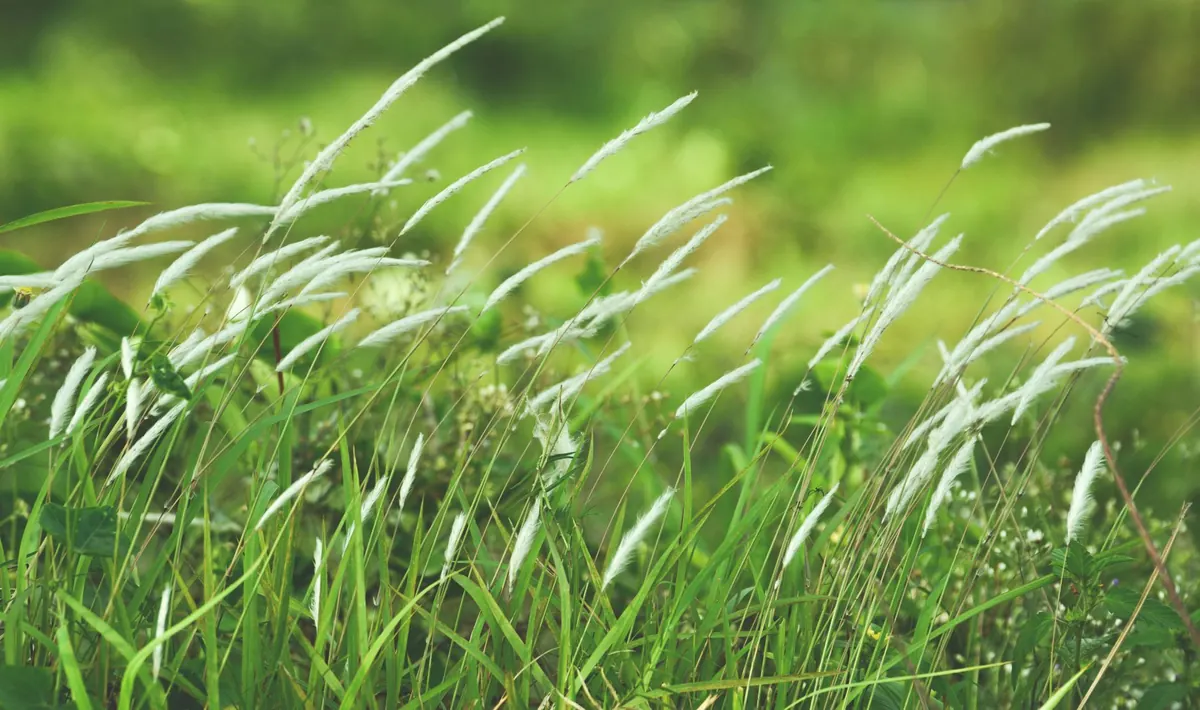
Crested dogstail, red fescue and common bent are the reliable backbone. Meadow foxtail and tufted hairgrass suit the wetter, heavier spots, though tufted hairgrass can become dominant. Avoid mixes loaded with vigorous agricultural grasses such as perennial ryegrass.
Wildflowers
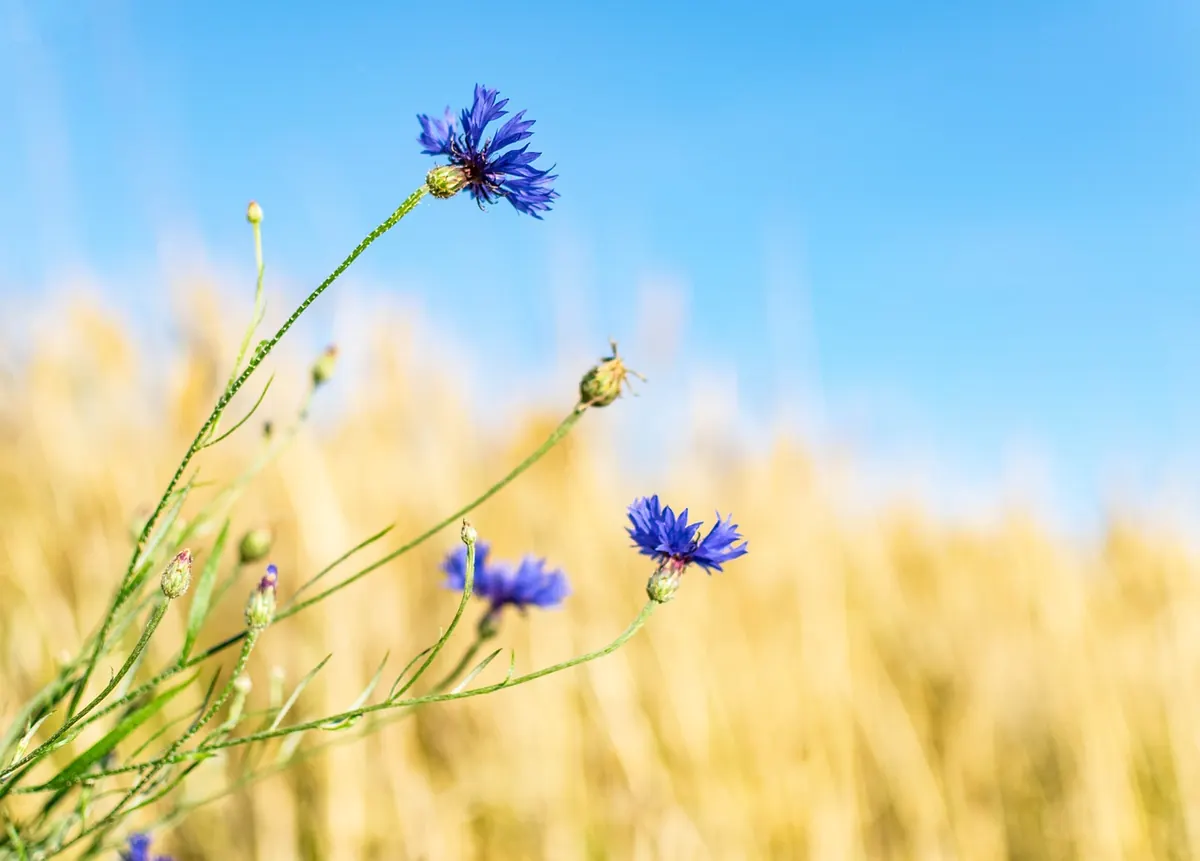
Cowslip, meadow buttercup, common knapweed, oxeye daisy, selfheal, great burnet, betony, meadow crane's-bill and field scabious all establish on clay. Snake's head fritillary is a lovely addition to damp clay ground, planted as bulbs rather than seed.
Yellow rattle
Yellow rattle is the cornerstone of a meadow on fertile ground: it parasitises grass and opens space for flowers. Sow it in autumn, because it needs cold to germinate, and expect it to establish slowly on clay. It often appears properly in the second year, so do not mow it before it sets seed in early summer.
As a rough guide, sow wildflower seed at 1–2g per square metre and grass at 2–4g per square metre. If that sounds fiddly, a combined meadow mix takes the guesswork out.
Sowing: timing and technique
Early autumn is the best window on clay — the soil is still warm, rain is usually on the way, and roots get a head start before winter. Spring sowing from March works, but you will be watering through any dry spell, and clay dries hard and fast.
Mix the seed with dry sand or fine compost so you can see where it lands, then split it in two. Sow half walking in one direction and half at right angles. Rake it in lightly, then roll or tread the ground so the seed is in contact with soil, not perched on a crust. If no rain is forecast, water gently and keep an eye on it for the first fortnight.
Plug plants are worth considering for awkward corners or if a sowing fails. They cost more, but on heavy clay a few hundred plugs of knapweed, cowslip and betony can carry a meadow while the seed sorts itself out.
The first two years
Year one is not a meadow; it is a weed-control exercise. Mow to about 5–7cm every six to eight weeks through the growing season, always removing the cuttings. This knocks back annual weeds without shading out the young meadow plants. Keep off the ground when it is wet, or you will undo your careful work on structure.
From year two, switch to a hay regime: one main cut in late July or August, leaving the cuttings in place for a few days to shed seed, then clearing them away. A second cut or light grazing in autumn tidies up regrowth if the season is mild. Never fertilise, and do not lime unless a test shows the soil is genuinely acidic. Every cut you cart off is fertility leaving the site, which is exactly what a meadow needs.
A realistic plan for a difficult site
If you remember nothing else: test the drainage, fix it if you can, work the soil only when it is dry enough, sow in autumn with a clay-suited native mix, and mow diligently for two years. Expect year three to be the first genuinely good one, and year five to be the meadow you had in mind. Clay rewards that kind of patience — it just takes its time about it.
Photo: Katja B / Pexels