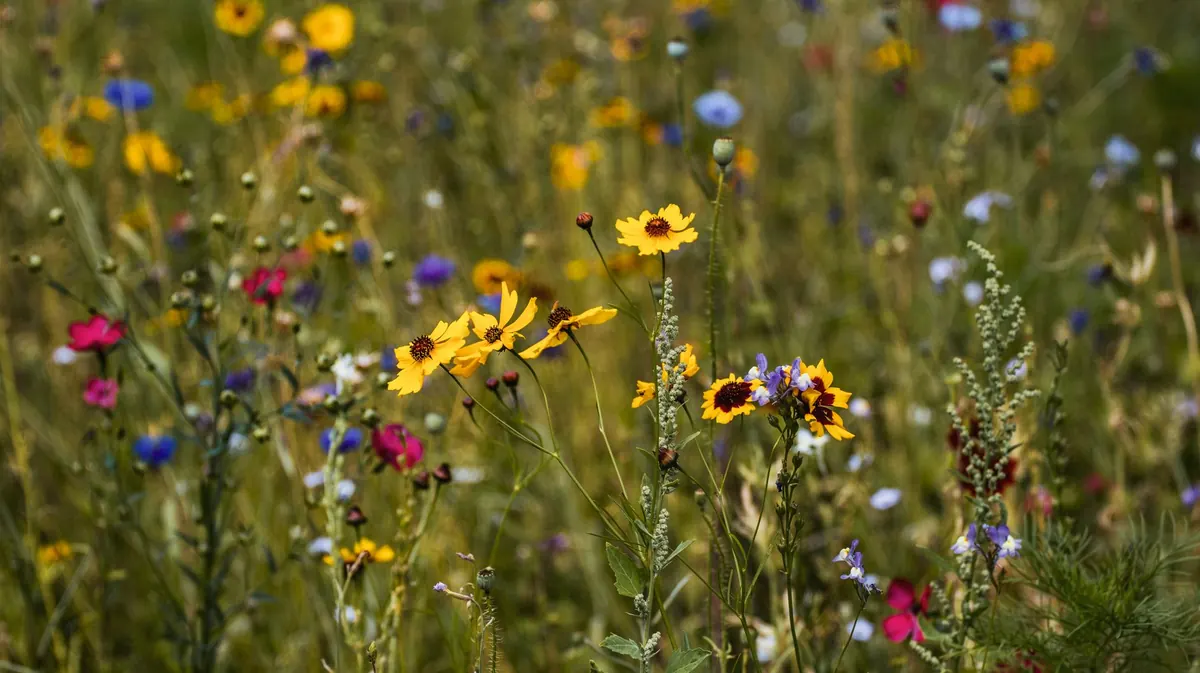
A wildflower meadow is a low-maintenance thing once it is up and running. Getting it there is the tricky part. Nearly every disappointing meadow traces back to the same handful of decisions: ground that was never properly cleared, a mix that was wrong for the soil, a mower that arrived a month too early. None of these are difficult to avoid. They simply have to be avoided before the seed goes in, not after.
The ground: where most meadows are lost
Mistake 1: Rushing the preparation. Wildflower seed sown into existing grass or a rough, weedy patch will usually fail, and it fails slowly enough to be disheartening. Perennial weeds — couch, dock, thistle, bindweed, nettle — regrow from root fragments, so one pass with a rotovator does little more than multiply them. If the site has been grass for years, expect to spend a full growing season on clearance. Cut or strim hard, let it regrow, and repeat. Every time you interrupt a weed before it sets seed, you weaken the root behind it.
Perennial weeds are where the rotovator gets people into trouble. Rotovating a patch of couch grass chops the roots into hundreds of viable pieces and spreads them through the soil, so a single rough pass turns a weedy corner into a field of couch. If the ground must be cultivated, do it after the weeds have been exhausted by repeated cutting, not before. A season of persistent strimming is dull work, but it is far less work than a summer spent hand-weeding a meadow that never got going.
Mistake 2: Ignoring the weed seed bank. Even bare ground holds years of dormant seed waiting for light. Prepare the seedbed a few weeks before sowing, then leave it. Water it if the weather is dry, let the weeds germinate, and hoe them off lightly before you sow. This stale seedbed approach costs you a fortnight and saves you a summer of hand-weeding. It also leaves you with a fine, firm surface for the seed to land on, which matters more than most people expect.
Fertility: the counter-intuitive bit
Mistake 3: Feeding the ground. Wildflowers are not hungry plants. They evolved on thin, poor soils where they had to compete for every scrap of nitrogen, and they are built for that life. Feed them and you do not get bigger, better wildflowers; you get tall, floppy, disease-prone plants and a thick mat of grass that smothers everything beneath it. Knapweed, ox-eye daisy and buttercup all respond to richness by growing soft and leaning, and the low-growing specialists — the bird's-foot trefoil, the small scabious, the wild thyme — simply disappear.
So do not add compost, manure, fertiliser or bagged "soil improver" to a meadow site. If anything, the aim is to reduce fertility before sowing. Where the ground is rich, the standard trick is to grow a hungry crop for a season — potatoes are the traditional choice — or take two or three cuts of grass and remove them, gradually stripping nutrients out of the soil. On a small plot, even skimming off the top inch of turf and soil and taking it away can help.
Mistake 4: Leaving the cuttings on the ground. This is the quiet one. A mown meadow that is never cleared is a meadow in retreat, because cut grass left to lie where it falls returns everything it took into the soil. Within two or three seasons the fertility climbs, the grasses thicken, and the flowers thin out. Rake up the cuttings, compost them, or use them as mulch somewhere that can take the richness. If you only ever change one habit, change this one.
The mower is not a tidy-up tool. It is how you take nutrients off the site, one cut at a time.
Choosing a mix that suits the ground
Mistake 5: Buying seed before reading the soil. A chalk downland mix scattered on heavy clay is money into the bin. Wildflower seed is expensive, and the species in a general-purpose "meadow" blend come from wildly different habitats. Walk the site first: is the soil acid or alkaline, wet or free-draining, shaded for part of the day? Then buy a mix that matches, or better, source seed from a local grower using native stock.
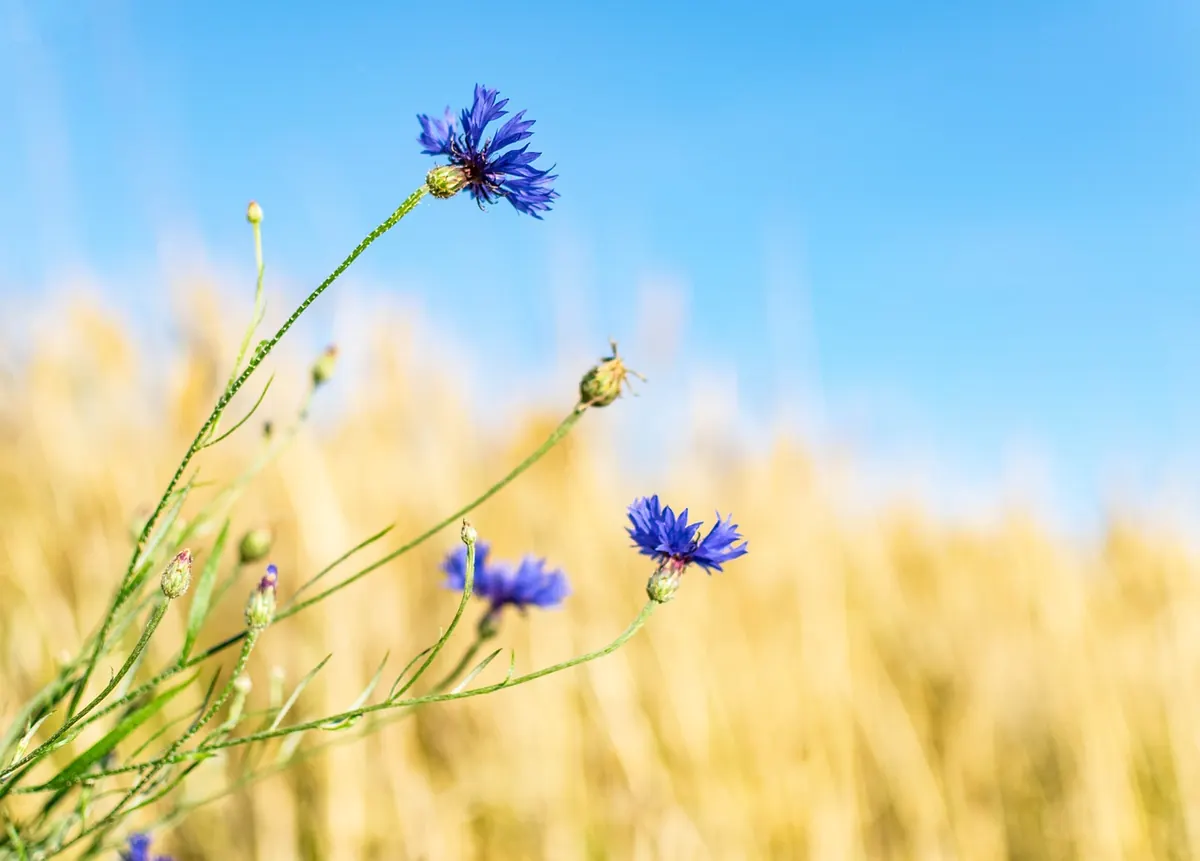
Mistake 6: Sowing annuals and expecting a perennial meadow. Cornfield annuals — poppies, cornflower, corn marigold — are often what people picture when they imagine a wildflower meadow, and in their first summer they deliver spectacularly. But they are annuals adapted to disturbed ground, and by the second year most of them are gone. If that is the effect you want, add them to the mix as a colourful first-year bonus and expect them to fade. If you want a meadow that returns year after year, the backbone must be perennials, plus a scattering of yellow rattle to keep the grass in check.
Sowing: small decisions, long consequences
Mistake 7: Sowing too deep. Most wildflower seed is tiny and needs light to germinate, or at worst a mere dusting of soil. Burying it an inch deep is one of the most common reasons for a bare patch where a meadow should be. Rake the surface to loosen the top half-inch, broadcast the seed, then press it in with a board or walk over it. Firm seed-to-soil contact does far more good than depth.
Mistake 8: Sowing too thickly. It sounds counter-intuitive, but a dense sowing produces a weaker meadow. Wildflower seed in a grass mix is generally sown at a gram or two per square metre; heavier than that and you get overcrowded seedlings, weak plants and no room for anything to establish properly. Mix the seed with dry sand or sawdust to bulk it out and broadcast it evenly in two passes, at right angles to each other.
The first year: the patience test
Mistake 9: Mowing too early — or not at all. A new meadow needs its first cut in the summer of sowing, but only once the flowers have set seed, and not a day sooner. Cutting in spring or early summer removes the very plants you are trying to establish. The exception is a quick topping cut at around 10 cm if annual weeds threaten to swamp the seedlings. Otherwise, let it grow, then cut and clear.
Mistake 10: Judging the meadow in its first summer. New meadows look untidy and thin. They are supposed to. Given time and the right management, the flowers arrive gradually, and owners who rip up a promising site in frustration in July have usually thrown away a meadow that was quietly working.
What to expect in the first three years
- Year one: mostly grasses and annuals, with a scattering of quick-establishing flowers. Thin and patchy is normal.
- Year two: perennials start to show properly. This is when yellow rattle does its work, weakening the grass and opening gaps.
- Year three onward: the meadow begins to look like the picture in your head. Species spread, and management settles into a simple rhythm of one or two cuts a year.
Before you sow: a short checklist
- Clear perennial weeds over a full season, not a weekend.
- Reduce fertility rather than adding to it.
- Match the mix to your soil and light.
- Leave a stale seedbed to draw out dormant weeds.
- Sow lightly and shallowly, and firm the surface.
- Plan your first cut before you sow, and plan to clear it.
None of this is complicated. It is mostly a matter of slowing down and doing the unglamorous work first. A meadow rewards patience more than any other kind of planting — and it punishes shortcuts in the same measure.
Photo: Aliaksei Semirski / Pexels